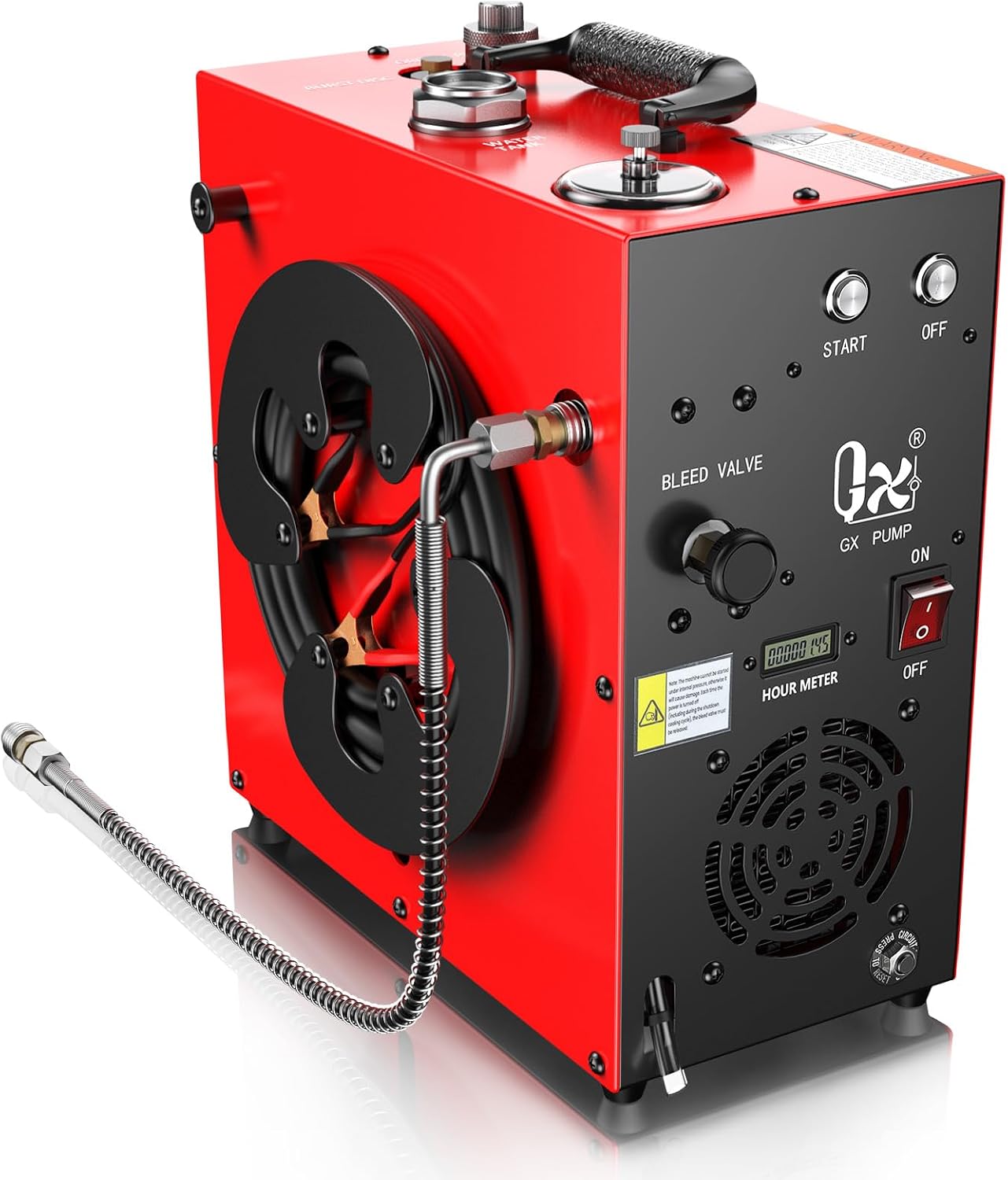
 Medium Duty
 GX Pump
GX Pump CS4
5,800 PSI max · Water + fan cooled
Water-cooled, 4-stage, 350W, 5800 PSI. Auto-stop, hour meter, rated for 5 hours continuous. 12V with a 110V converter included.

Water Cooled / Guide
What to put in a GX CS4, CS4-I, 5K, GOYOJO AC3 or any other water-cooled compressor, and why leaving one in a cold garage can kill it.
The instructions aren't consistent, even within one brand. Always follow your own manual first.
| Compressor | Manufacturer says |
|---|---|
| GX CS4-I | Neutral (pH about 7) distilled water or antifreeze. Add antifreeze if it freezes where you live. |
| GX CS4 | About 300 ml of neutral antifreeze; the listing says not to use distilled water. |
| GX 5K1 / 5K2 | About 500 ml of automotive coolant before the first start. |
| GOYOJO AC3 | Neutral distilled water or neutral antifreeze. Never mineral water. |
| Bucket-cooled units (Yong Heng, VEVOR 2200W, Tuxing TXEDM042) | Water from a bucket you supply; some say change it every 30 minutes. |
Good: cheap, pH neutral, and plain water actually transfers heat better than antifreeze.
Bad: no corrosion inhibitors, no pump lubrication, and it freezes. Fine in a heated space, risky anywhere else.
Never use tap or mineral water. The minerals leave deposits in the small passages.
Red Line WaterWetter, Royal Purple Purple Ice, and Rislone Hypercool reduce surface tension so the coolant pulls heat away better. They also add corrosion inhibitors, which plain water lacks.
They add zero freeze protection. Use them with antifreeze if the compressor will ever see freezing temperatures.
Engine Ice is a ready-to-use 50/50 mix of propylene glycol and deionized water, rated to freeze at -26°F and boil at 256°F. Propylene glycol is far less toxic than the green ethylene glycol coolant, which matters with pets and kids around, and it's safe for aluminum.
The tradeoff: glycol carries heat a little less efficiently than plain water.
An aluminum-safe coolant mixed with distilled water gives freeze protection plus corrosion inhibitors and pump lubrication. One GX CS4 owner's write-up used Zerex G48 at 70% coolant to 30% distilled water, choosing it for its near-neutral pH (about 7.1 to 7.3 as concentrate).
Look for a coolant that's aluminum-safe with a pH of roughly 7 to 9, and don't mix coolant types.
This guide pulls together manufacturer instructions and what owners report, but compressors change between production runs and listings don't always agree. Before you order a coolant or additive, check your compressor's manual, confirm the product is safe for aluminum, and read what other owners of your exact model are using. When in doubt, ask the seller or the manufacturer.
This guide collects manufacturer instructions and owner experience. It isn't a substitute for your compressor's manual or warranty terms. Coolant products are named for reference, not as endorsements.
Medium Duty 5,800 PSI max · Water + fan cooled
Water-cooled, 4-stage, 350W, 5800 PSI. Auto-stop, hour meter, rated for 5 hours continuous. 12V with a 110V converter included.
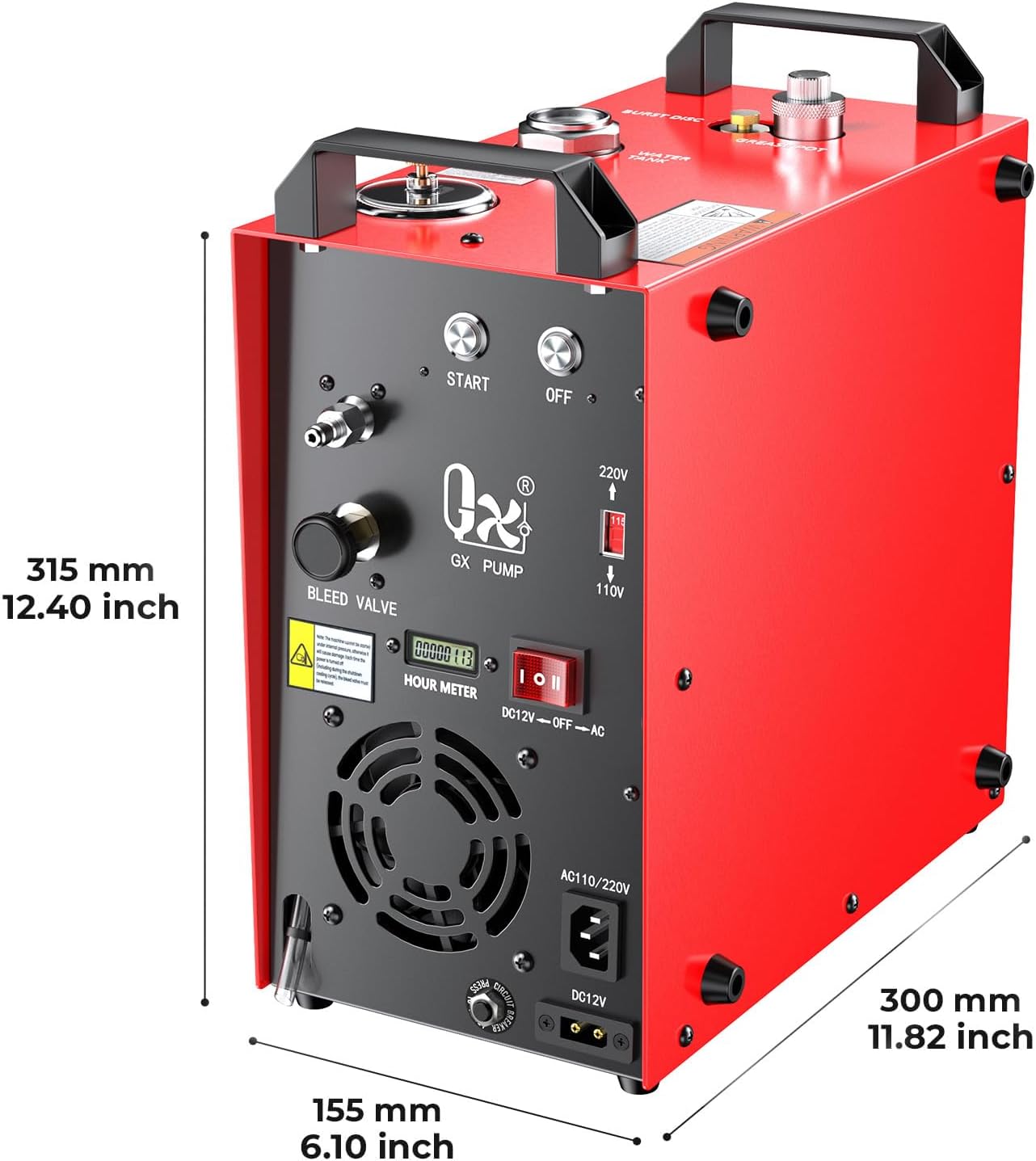 Medium Duty
 5,800 PSI max · Water + fan cooled
The CS4 with the 110V converter built in. Water-cooled, 4-stage, 350W, 5800 PSI, auto-stop, 5 hours continuous. Roger's champion pick.
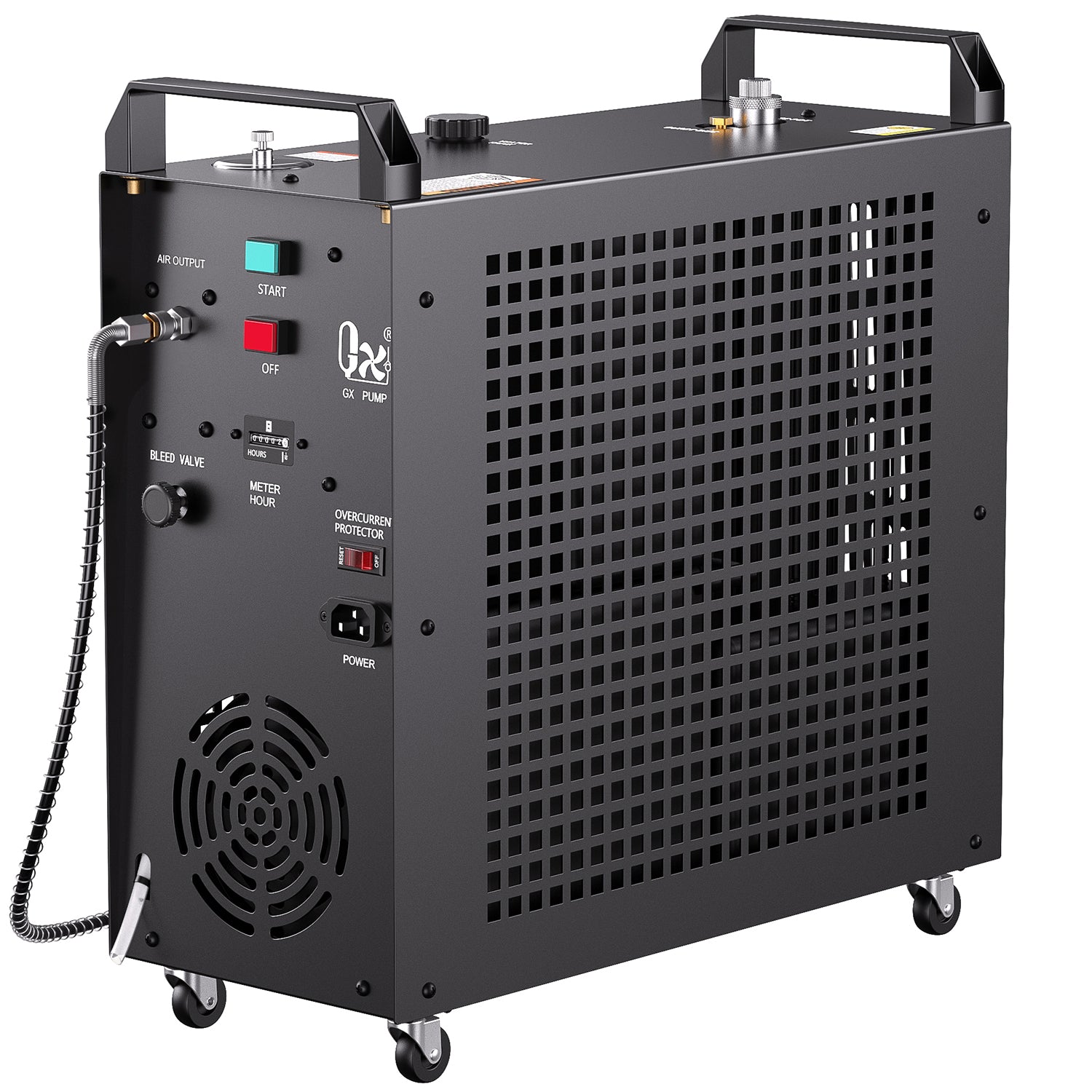 Medium Duty
 5,800 PSI max · Water + fan cooled
The single-piston 5K2. 4-stage, 900W, 5800 PSI, auto-stop, 10 hours continuous. Sold direct by GX.
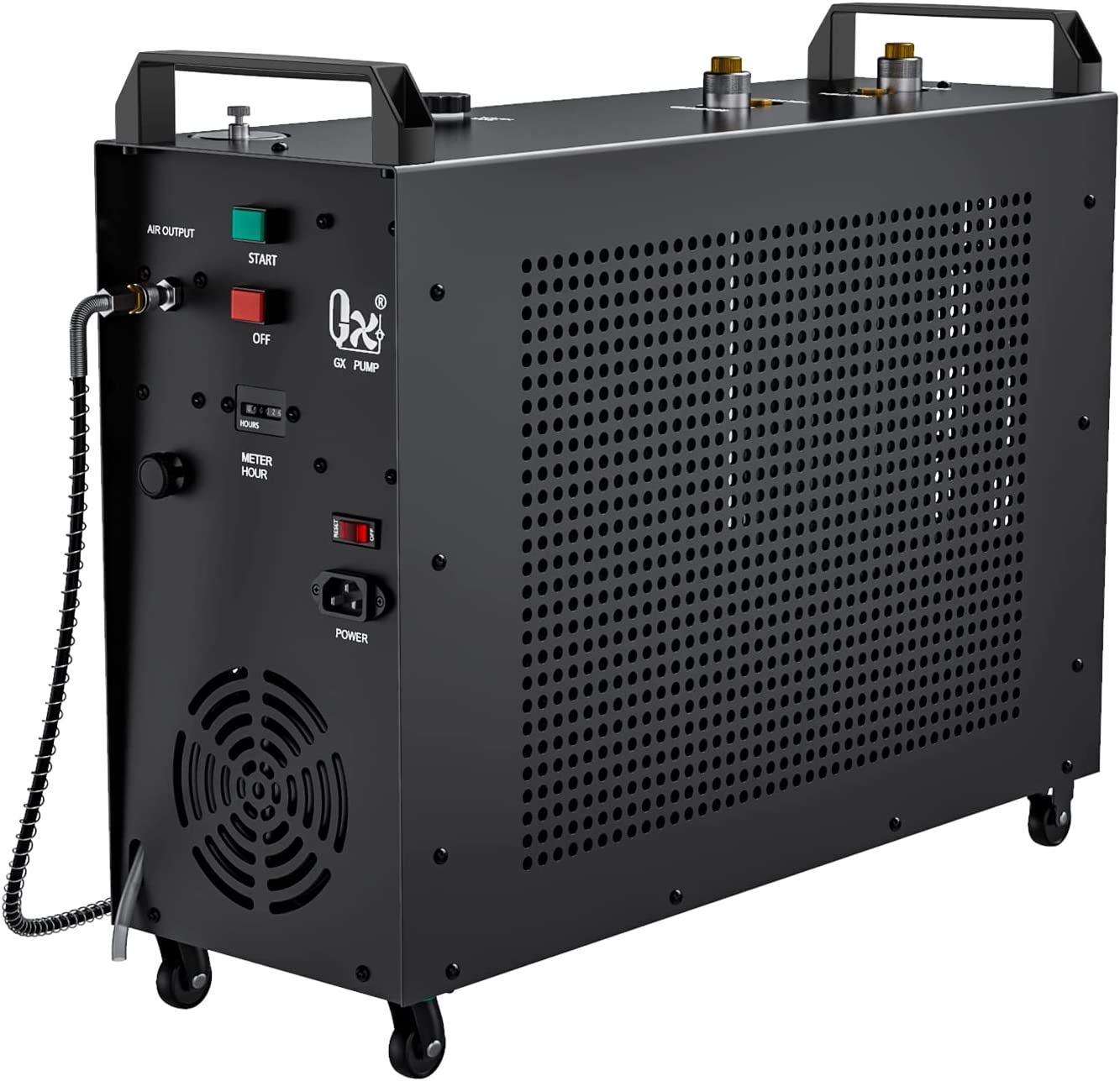 Medium Duty
 5,800 PSI max · Water + fan cooled
Dual-piston, 4-stage, 1200W, 5800 PSI. Fills a 6.8L tank in about 45 minutes. Rated for 10 hours continuous. Sold direct by GX.
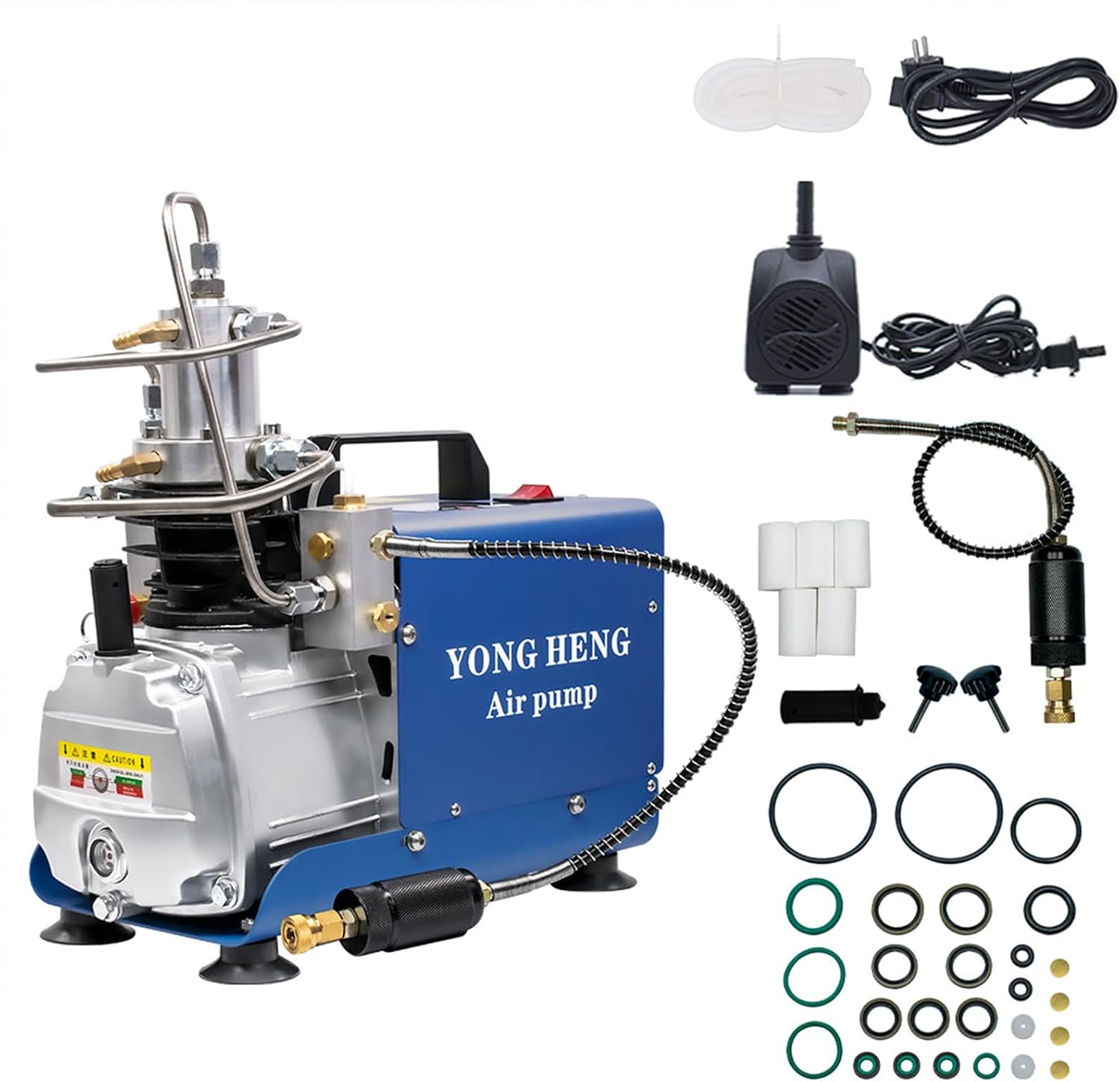 Medium Duty
 4,500 PSI max · Water-cooled (external bucket)
The classic Yong Heng design with an LCD gauge and auto-stop. 110V, two-stage, fast, but it needs an external bucket of cooling water.
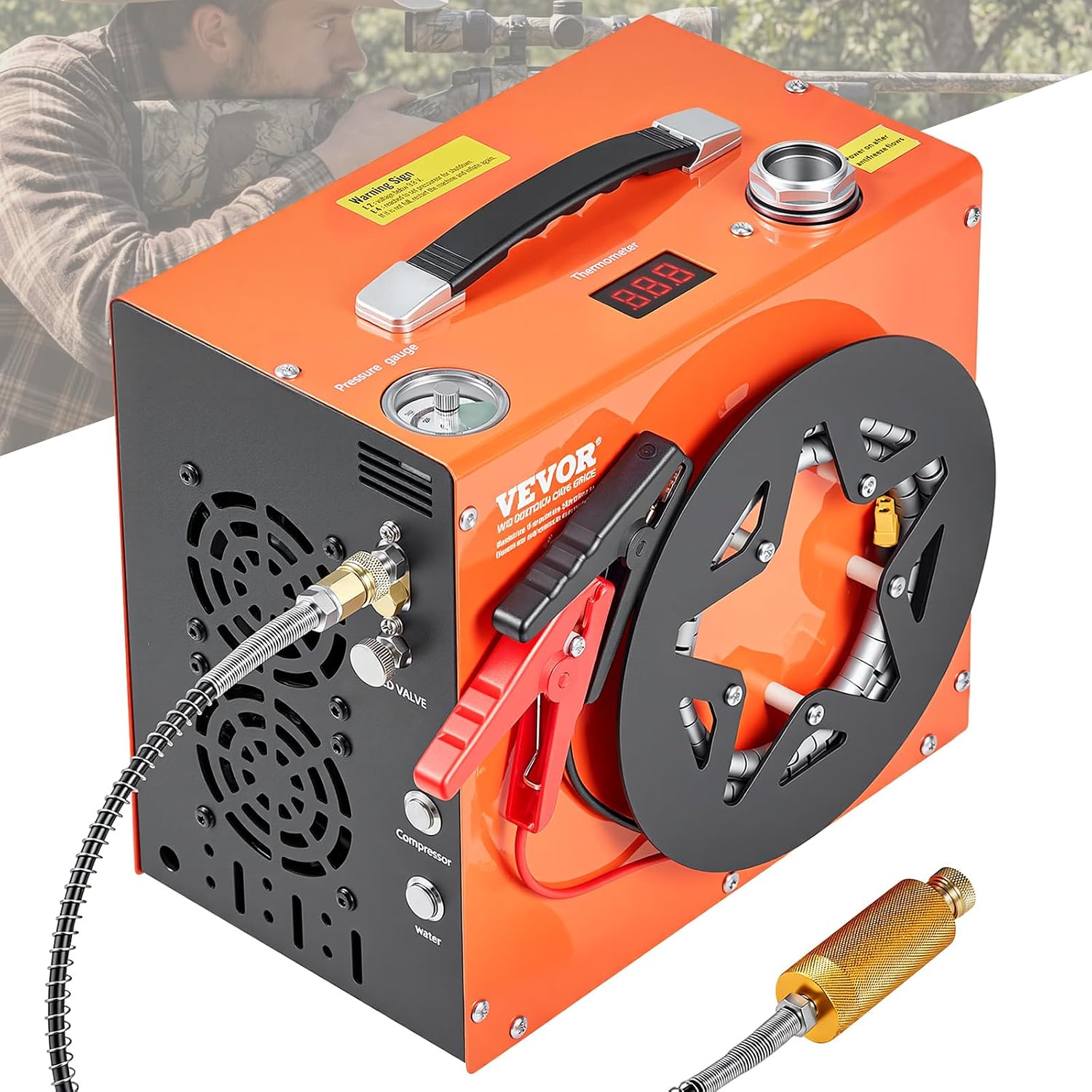 Light Duty
 4,500 PSI max · Water + fan cooled (coolant tank on top)
VEVOR's portable with a coolant tank on top plus a 12,500 rpm fan. 4500 PSI, auto-stop, 600W converter, 12V or 120V.
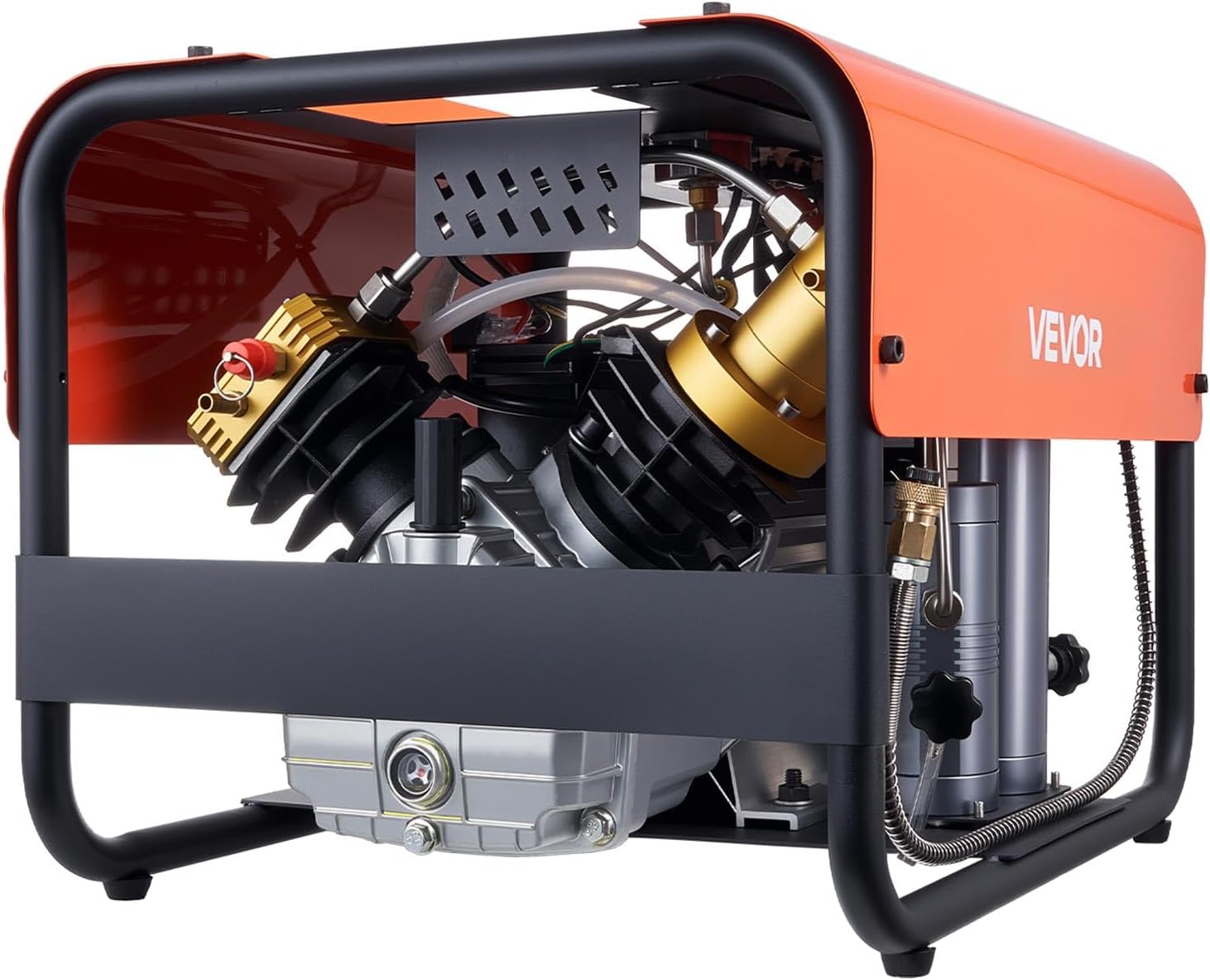 Light Duty
 4,500 PSI max · Water + fan cooled (external bucket)
VEVOR's scuba-style compressor: 2200W dual-cylinder, 35 L/min, carbon + molecular-sieve filtration, external water cooling, oil-lubricated.
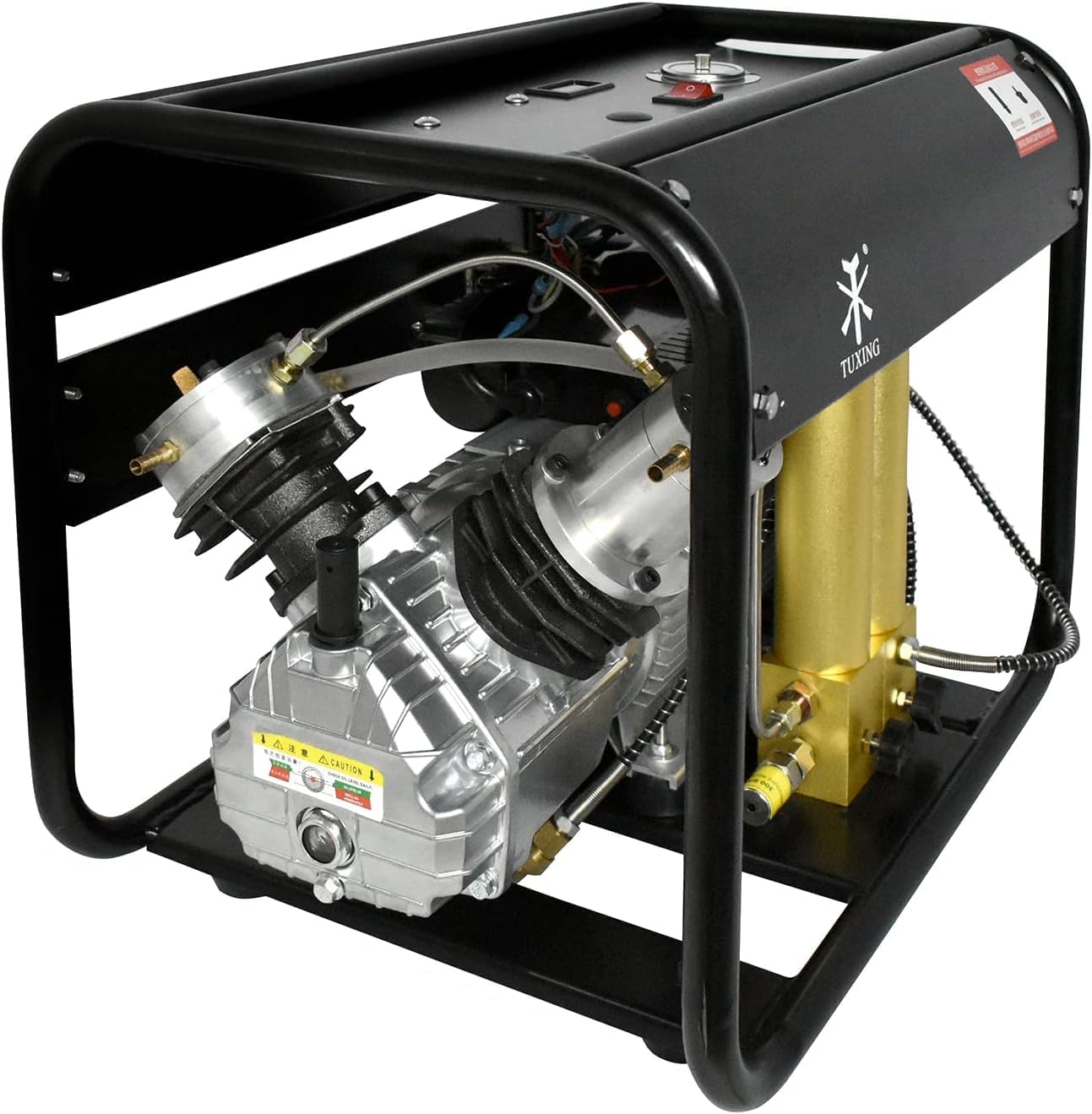 Light Duty
 4,500 PSI max · Water + fan cooled (external water supply)
Tuxing TXEDM042: 2.2kW two-stage compressor, 50 L/min, two-stage filtration, auto-stop, external water + fan cooling. Oil-lubricated.
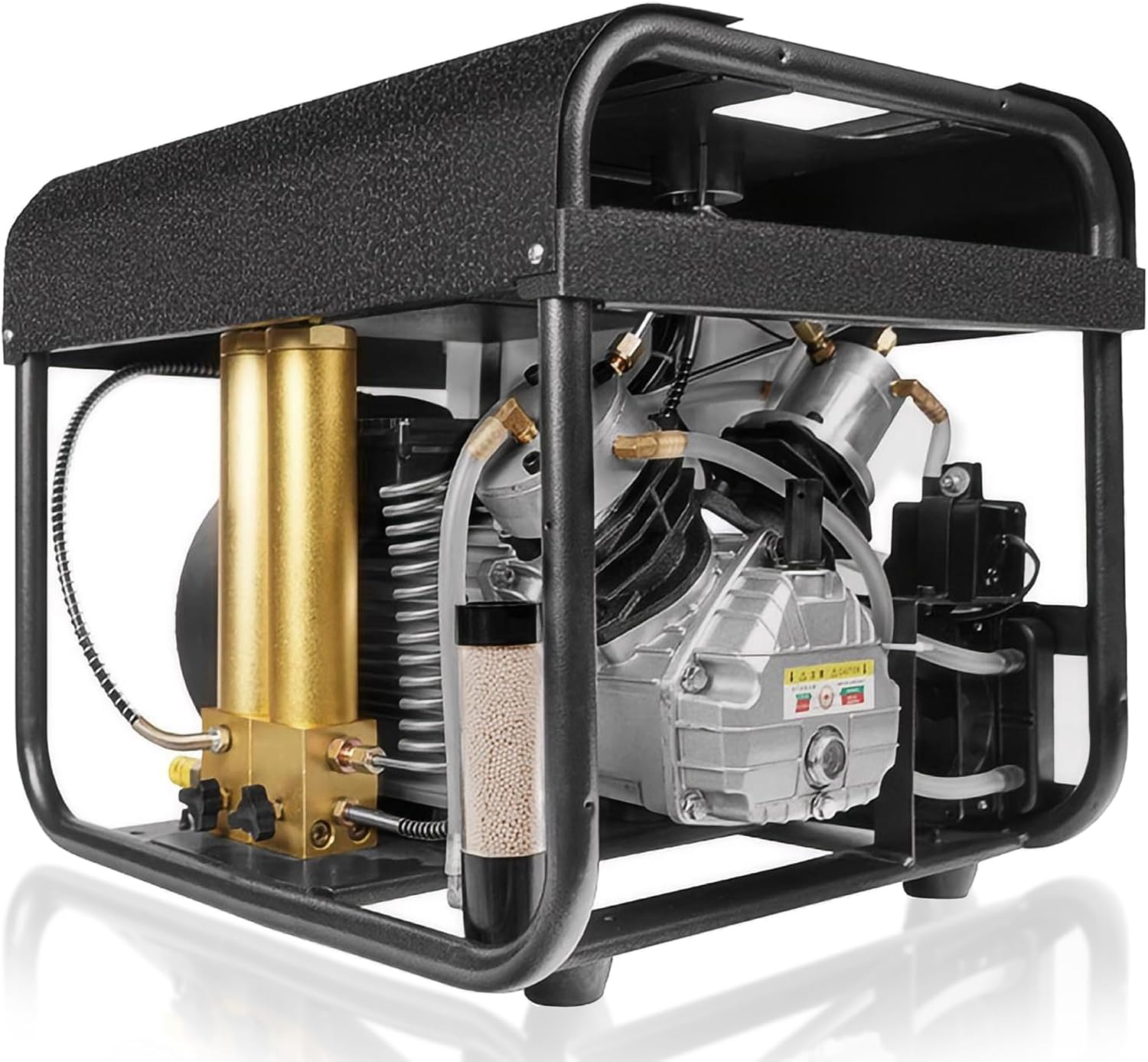 Light Duty
 4,500 PSI max · Water + fan cooled (built-in reservoir, triple fans)
Tuxing TXEDT032 scuba compressor: 50 L/min, built-in water reservoir with triple fans (no bucket), two-stage filtration with carbon and molecular sieve.
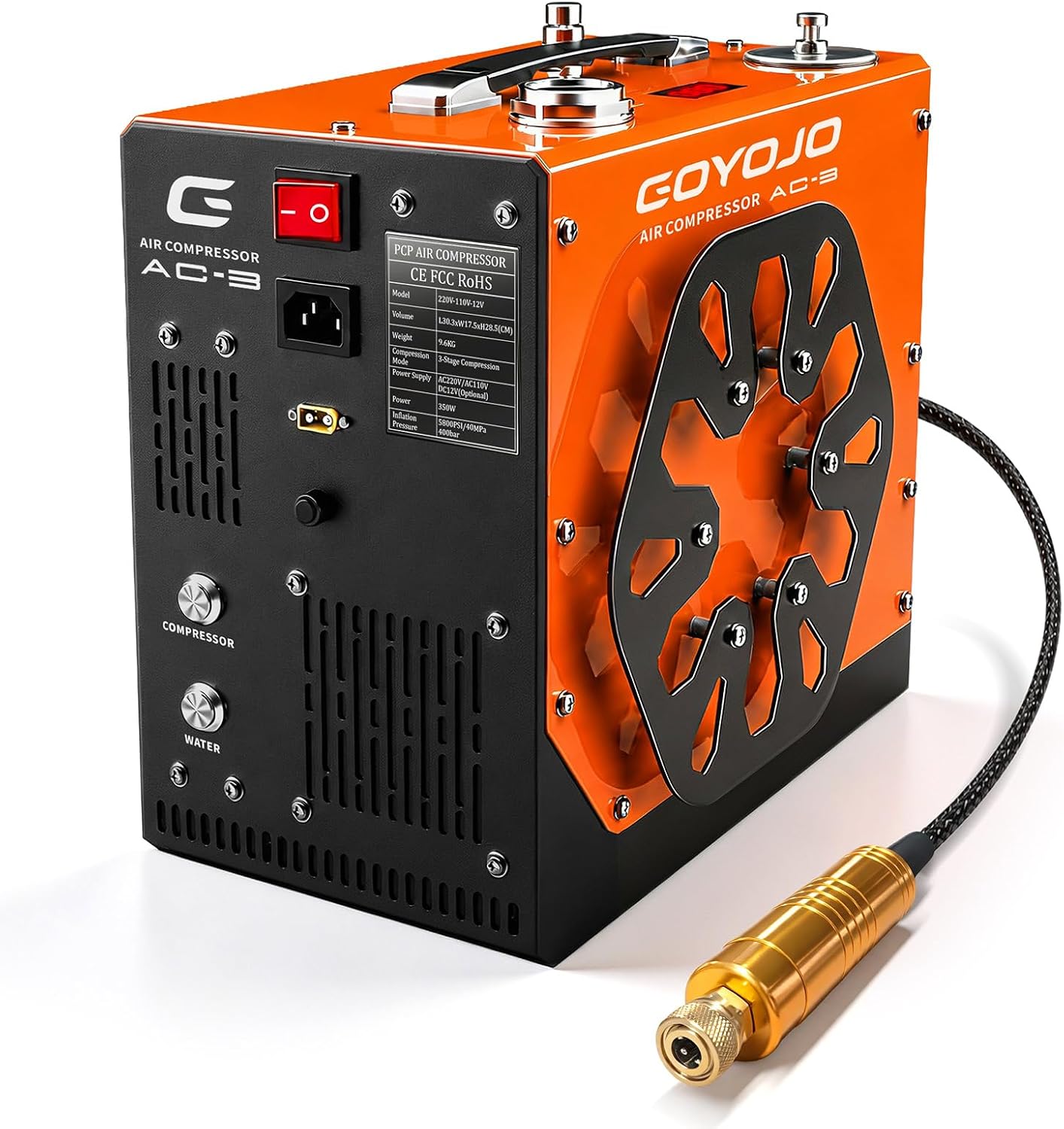 Medium Duty
 5,800 PSI max · Water + fan cooled
GOYOJO's water-cooled 5800 PSI machine: 350W 4-stage, dual-pointer auto-stop, external grease pot, built-in converter. A close match to the GX CS4-I.